Mold Education

What Causes Mold Growth?

Why mold shows up in homes, where it hides, and how the Southwest Missouri climate around Springfield, MO feeds it.

The Recipe Is Simple

Mold needs three things: moisture, a food source, and time. The food is everywhere in a building, since mold happily digests drywall paper, wood, dust, and fabric. Time takes care of itself. That leaves moisture as the only ingredient a homeowner controls, which is why every real mold problem is a moisture problem underneath.

The moisture can be dramatic, like a burst pipe or a flooded basement, but more often it's quiet: a slow leak under a sink, foundation seepage after heavy rain, humid air condensing on a cool wall, or a bathroom fan that vents nowhere. Growth can establish within days on wet material, then spread as long as the moisture lasts.

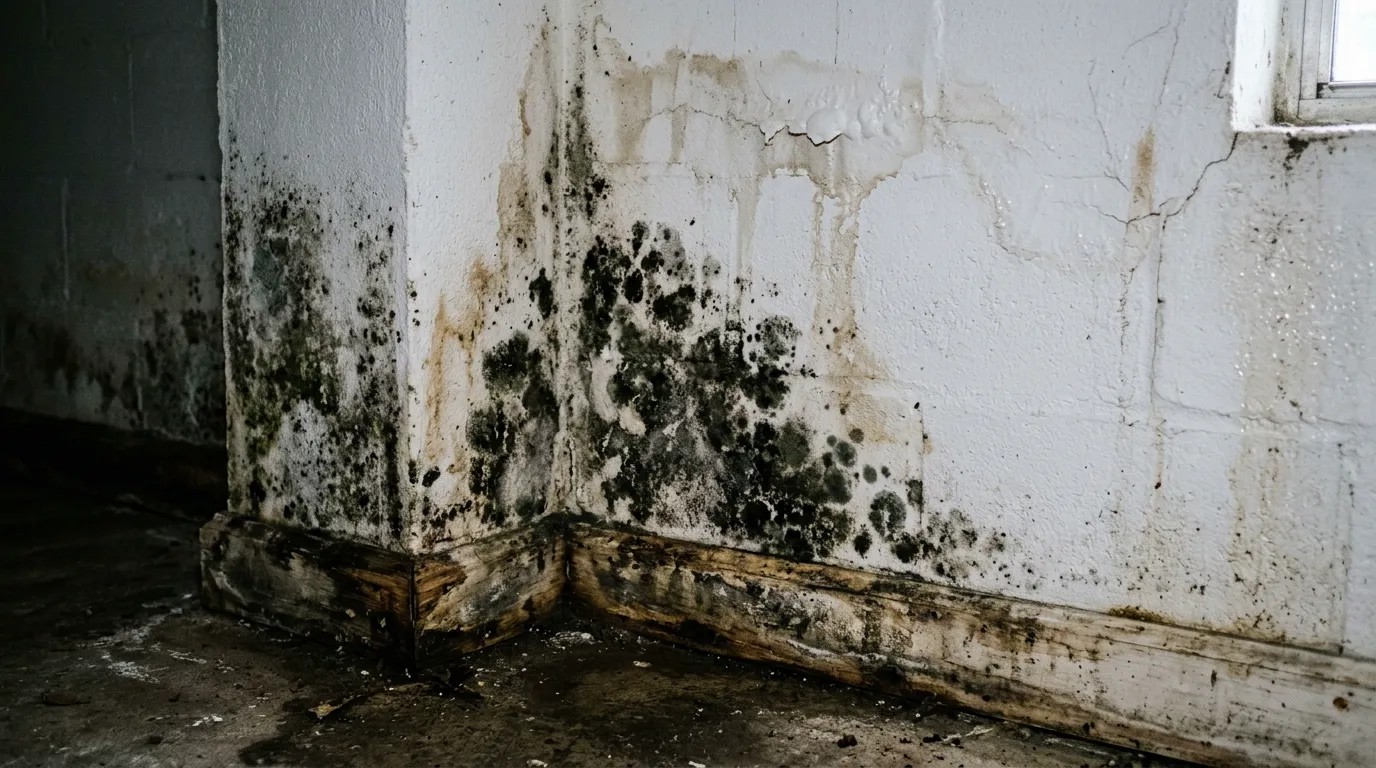
Mold growth spreading across a damp interior wall near the baseboard

Where Mold Hides

Mold favors the places you don't look: basements and crawl spaces, behind furniture on exterior walls, inside wall cavities after a leak, under carpet pads, above ceiling tiles, in attics, and inside HVAC systems. Visible growth is often the edge of the problem rather than the whole of it.

The most reliable early warning isn't visual at all. A persistent musty, earthy smell means mold is actively growing somewhere, releasing the compounds you're smelling, even when nothing is visible. Treating an unexplained musty smell as real evidence, rather than something to get used to, catches problems while they're still small.

Health Considerations, Honestly

Mold exposure affects people differently. For many it causes nothing noticeable. For others it triggers allergy-type symptoms: congestion, irritated eyes, coughing, and worsened asthma. People with asthma, allergies, respiratory conditions, or weakened immune systems, along with young children and older adults, tend to be more sensitive.

Public health agencies including the EPA and CDC take a consistent position: indoor mold growth should be removed and its moisture source fixed regardless of the species, and testing to identify the type rarely changes what needs to happen. That's the standard we work to, without inflating the risk to sell a bigger job.

Why This Region Grows So Much of It

The climate around Springfield is generous to mold. Long, humid summers keep indoor humidity elevated for months, which alone can sustain growth in poorly ventilated spaces. Spring and summer storms push water against foundations and into basements and crawl spaces. Season changes create condensation as warm moist air meets surfaces that are still cool.

Add in the region's mix of older buildings with damp below-grade spaces and newer, tighter construction that holds moisture in, and mold ends up genuinely common across the Southwest Missouri. Common doesn't mean harmless, but it also doesn't mean catastrophic. It means worth checking properly.

What Actually Prevents It

Prevention is moisture management: fix leaks promptly, dry any soaked material within a day or two, keep indoor humidity roughly under 50 percent with dehumidification where needed, ventilate bathrooms and kitchens to the outdoors, keep gutters and grading moving water away from the foundation, and don't ignore musty smells.

When growth does establish, the fix is the same every time: remove it properly, and fix the moisture that fed it. Do both and mold stays gone. Do only the first, and it comes back on schedule. That principle is the foundation of how Springfield Mold Remediation scopes every job.

Get an Honest Mold Assessment

Find out what's actually growing, what's feeding it, and what fixing it properly takes.

Call (417) 275-6307   Request a Free Estimate

Free, no-obligation estimate